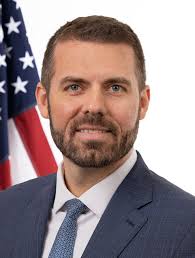
You spent years as a lawyer defending an infant-formula maker against claims that it failed to warn. Now you hold the pen at the FDA. I am writing to ask you, one formula lawyer to another, to require the testing and inspection that would actually meet the standard of care — across the whole chain of production, not just the last can on the line.
Dear Mr. Diamantas:
I am going to write to you the way one lawyer writes to another, because that is what we both are, and because we have spent our careers on opposite ends of the same docket.
For more than thirty years I have represented the people on the plaintiff’s side of the “v.” — the families of those poisoned by a single meal. You and I have never met across a courtroom, but we very nearly share a practice area. As a partner at Jones Day in Miami, you defended Abbott Laboratories in the Missouri litigation over its specialized formula for premature infants and necrotizing enterocolitis — litigation built on the claim that the company failed to adequately warn parents, and litigation that, as the New York Times reported, produced a $495 million jury verdict your client is appealing. You represented the manufacturer. I represent babies. We both know exactly how these cases work.
Let me start where you and I should be able to agree, because it is genuine. On April 29, 2026, the agency you now lead released the largest and most rigorous testing of infant formula ever conducted in this country — more than 300 samples, more than 120,000 data points, screened for lead, mercury, cadmium, arsenic, pesticides, PFAS, and phthalates. The overwhelming majority of samples came back undetectable or very low. That is real work, and it is good for parents. I will say it plainly: I am glad you did it.
Now let me say the harder part, lawyer to lawyer.
You, of all people, know what a warning is
In our world, a warning is not a press release. It is a legal event. It is notice — the moment a defendant can no longer say it did not know. You spent years arguing about exactly that: what your client knew, when it knew it, whether the hazard was foreseeable, and whether the warning given was adequate. You know that once a foreseeable hazard is on the record, the duty to act attaches, and “we didn’t realize” stops being a defense.
You will recognize the document I am about to hand you, because it is a warning in every sense you and I would use the word.
On March 8, 2023, the FDA — your agency — sent a Call-to-Action letter to the entire powdered infant formula industry: manufacturers, packers, distributors, importers, and retailers. It was signed by the Commissioner of Food and Drugs and the Director of the Center for Food Safety and Applied Nutrition. It did not deal in generalities. It named the hazard. It told the industry, in writing, that the historical associations between powdered formula and Clostridium botulinum — the spore that produces the toxin that causes botulism — had to be accounted for in the design of their controls. It instructed that process controls must cover every stage, from the receipt of raw materials and ingredients through the storage and distribution of the finished product, under 21 C.F.R. § 106.6(c). It told manufacturers to build real supply-chain programs for ingredients that get no kill step at the plant, under 21 C.F.R. § 117.405, because a supplier whose powder is dry-blended into formula is — in the agency’s own words — an extension of the manufacturing process.
That is notice. That is foreseeability, reduced to writing, by the regulator, years before the harm. You know what that means in a courtroom. I am asking you to act on it from the other chair.
The chemicals are not what put babies in the hospital
Here is why the April testing, as good as it is, does not close the case.
In thirty years, I cannot point you to a single American infant hospitalized by the trace lead or arsenic in a can of formula. I can point you to forty-eight of them, across seventeen states, hospitalized in the last seven months by Clostridium botulinum. That is the ByHeart outbreak — forty-eight infants, forty-eight hospitalizations, and by the FDA’s own description the first documented botulism outbreak in this country ever attributed to contaminated infant formula. Then came a second, Nara Organics, recalled in June, tracing back to the same kind of whole-milk-powder supply and three kids hospitalized.
The chemical survey tested the finished can on the shelf. It is a useful test at the end of the line. However, what sickened these kids rode in on an ingredient, traveled down a chain of dairies and dryers and blenders, and survived into the bottle. You can test the last can a hundred thousand times and never see it coming.
And the proof is not theoretical — it is genetic. In ByHeart, whole genome sequencing matched the Clostridium botulinum in the closed, finished cans, and in a sick infant, to isolates of organic whole milk powder the FDA collected upstream at Dairy Farmers of America, the dryer in ByHeart’s supply chain. The genome does not lie. The danger entered upstream, exactly where the 2023 letter said to look — and exactly where a finished-product chemical survey does not.
The rule you administer has a hole in it
You will appreciate this, because it is a regulatory-text problem, and that was your stock in trade.
Federal regulation already requires powdered-formula makers to test every production aggregate before distribution. Under 21 C.F.R. § 106.55, exceeding the limit deems the product adulterated. Good. But read the table. It names exactly two organisms — Salmonella and Cronobacter — at a tolerance of zero. There is no testing standard in that table for Clostridium botulinum. None. Meanwhile, for liquid formula, § 106.55(b) sends manufacturers to 21 C.F.R. Part 113, the low-acid canned food rules — the entire federal regime built to keep botulism out of a sealed can. Our law takes botulism with deadly seriousness in a can of liquid formula and says nothing about it in a tub of powder. That is the hole these babies fell through. Your own agency has half-admitted it: in February 2026 the FDA quietly launched a sampling assignment for dairy ingredients — whole milk powder, dry milk, whey — and called it part of its response to the 2025 outbreak. That is the right instinct. It is also a concession about where the danger lives.
You hold the pen now
And now you hold it more completely than when this all began. Since Commissioner Makary’s resignation last month, you are no longer only the FDA’s top food official — you are its Acting Commissioner, running the entire agency. I am mindful of the obvious, and I will state it fairly rather than let it sit unspoken. You came to the agency from the defense side of infant-formula litigation, and your recusal related to Abbott — during which, HHS says, you voluntarily stepped back from all infant-formula matters — concluded in January 2026. Which means the April testing program, and the rules that govern what gets tested and where, are now yours to shape. Critics see a conflict. I see something more useful: a regulator who understands this problem from the inside better than almost anyone who has ever held your job.
You spent years arguing that a manufacturer met the standard of care, that its warnings were adequate, that it did what a reasonable company should. You know precisely what that argument requires — and precisely where it collapses. You know, better than I could tell you, what it would take for a formula maker to actually be able to prove it did everything right. I am asking you to write that standard into the rules, for everyone, before the next baby gets sick.
Test the whole chain, not just the last can
Sample and sequence the dairy ingredients — the whole milk powder, the dry milk, the whey — at the dairy, the dryer, and the blender, not only after they are sealed for an infant. That is where these spores live and travel. It is also exactly what you would have wanted your client to be able to prove it required of its suppliers.
Add the spore-formers to the rule
Salmonella and Cronobacter belong in § 106.55. Clostridium botulinum and Bacillus cereus now belong there too. Give powder the same seriousness about botulism that the law already gives a sealed can of liquid.
Field the inspectors
None of this is self-executing. A testing standard means nothing without the people to walk the dairies, the dryers, and the blending floors and verify the controls your own agency demanded in 2023. You have publicly acknowledged that the agency struggles with resources. I am asking you to fight for those resources rather than preside over their loss — because you cannot inspect a supply chain you have laid off the staff to visit.
You and I will probably never agree about which side of the “v.” to sit on. That is fine; the adversary system is supposed to work that way. But we are both officers of the court, and we both took an oath that means something. You now have the one thing a defense lawyer never has: the power not just to argue about the standard of care after a baby is hurt, but to set it before. I am glad you tested our children’s formula for arsenic and found it clean. Now please test — and inspect — for the thing that actually put babies in hospital beds, where that thing lives, which is the whole chain behind the can.
Respectfully, counselor to counselor,
Sources
- FDA, Kyle Diamantas, J.D., Deputy Commissioner for Food (bio) — https://www.fda.gov/about-fda/fda-organization/kyle-diamantas; later elevated to Acting FDA Commissioner (May 2026): STAT, FDA Commissioner Marty Makary resigns, replaced by Kyle Diamantas (May 12, 2026) — https://www.statnews.com/2026/05/12/fda-commissioner-marty-makary-resigns-kyle-diamantas-acting/
- Christina Jewett, He Fought Claims of Harm From Infant Formula. Now He Regulates It., New York Times (Mar. 2025) (Abbott defense; preterm-formula/NEC failure-to-warn; $495 million verdict on appeal) —https://www.sej.org/headlines/he-fought-claims-harm-infant-formula-now-he-regulates-it
- Food Safety News, Interim FDA food official represented firm behind infant formula outbreak (Mar. 6, 2025) — https://www.foodsafetynews.com/2025/03/interim-fda-food-official-represented-firm-behind-infant-formula-outbreak/
- FoodNavigator-USA, As FDA leadership shifts, observers warn of rising food safety risks (Feb. 18, 2026) (Abbott recusal concluding Jan. 2026; resource constraints) — https://www.foodnavigator-usa.com/Article/2026/02/18/fda-leadership-shake-up-raises-food-safety-concerns/
- FDA, FDA Releases Results from Largest-Ever Testing of Infant Formula in the U.S. (Apr. 29, 2026) — https://www.fda.gov/news-events/press-announcements/fda-releases-results-largest-ever-testing-infant-formula-us
- FDA, FDA’s Infant Formula Product Testing Results — https://www.fda.gov/food/infant-formula-homepage/fdas-infant-formula-product-testing-results
- 21 C.F.R. § 106.55 (Salmonella and Cronobacter only; liquid directed to Part 113) — https://www.ecfr.gov/current/title-21/chapter-I/subchapter-B/part-106/subpart-B/section-106.55
- 21 C.F.R. Part 113 (low-acid canned foods — the C. botulinum control regime) — https://www.ecfr.gov/current/title-21/chapter-I/subchapter-B/part-113
- 21 C.F.R. § 106.6 and § 117.405 (all-stage process controls; supply-chain program) — https://www.ecfr.gov/current/title-21/chapter-I/subchapter-B/part-106/subpart-B/section-106.6
- FDA, March 8, 2023 Call-to-Action Letter to the Powdered Infant Formula Industry (names C. botulinum) — discussed in Publisher’s Platform, Food Safety News (June 2, 2026) — https://www.foodsafetynews.com/2026/06/publishers-platform-24/
- FDA, Outbreak Investigation of Infant Botulism: Infant Formula (November 2025) (ByHeart; 48 illnesses, 17 states; WGS link to whole milk powder at DFA) — https://www.fda.gov/food/outbreaks-foodborne-illness/outbreak-investigation-infant-botulism-infant-formula-november-2025
- FDA, Operation Stork Speed (Feb. 2026 dairy-ingredient sampling) — https://www.fda.gov/food/infant-formula-homepage/operation-stork-speed
- Food Safety News, Publisher’s Platform: Nara used same supply chain as ByHeart (June 23, 2026) — https://www.foodsafetynews.com/2026/06/publishers-platform-nara-used-same-supply-chain-as-byheart/