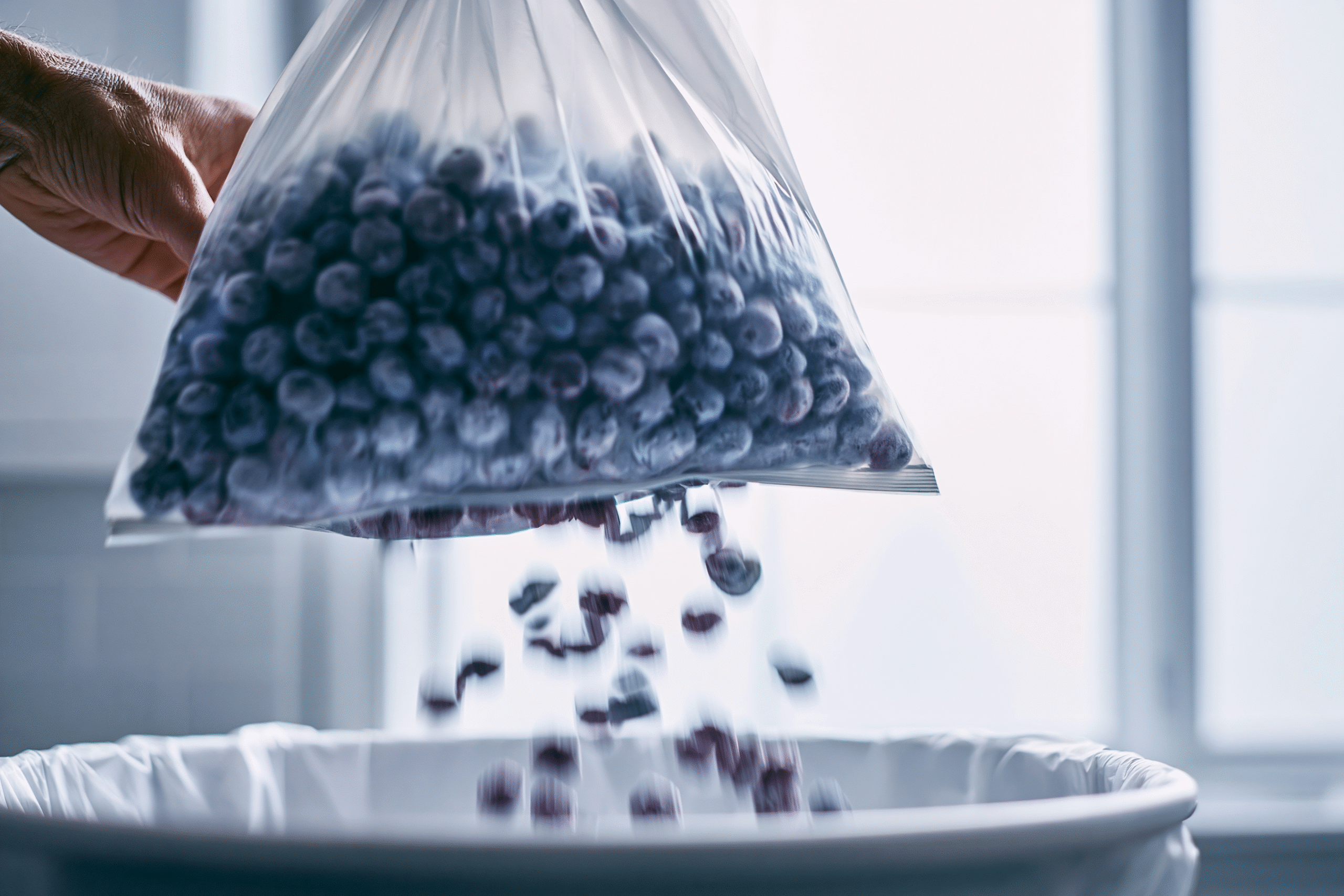
If there is one sentence every family kept taped to the freezer door, it is this: when in doubt, throw it out. I honestly do not know who coined the phrase. But whoever it was understood something a lot of companies still don’t: a bag of contaminated food is never worth a child’s kidneys.
On July 3, 2026, Frutas y Hortalizas del Sur S.A. of San Carlos, Chile — the supplier behind Publix’s store brand — recalled frozen GreenWise Organic IQF Blueberries in 10-ounce packages after they were linked to an outbreak of E. coli O145:H28. The FDA and CDC posted their advisories on July 6 and 7. As it stands, twelve people across Florida and Georgia have been confirmed sick, and four of them have been hospitalized. Illnesses began between May 11 and June 5, 2026. No deaths — yet — but four hospitalizations out of twelve does not describe a bad stomachache. Some of these people were seriously ill.
The trail started in Florida. On July 1, the Florida Department of Health flagged a cluster of E. coli O145 illnesses, and interviews with sick people pointed straight at frozen GreenWise-brand organic blueberries sold at Publix. Publix pulled the product from its shelves, and the Chilean supplier followed with a recall two days later.
If you have GreenWise Organic frozen blueberries at home, here is exactly what to look for:
- Product: Frozen GreenWise Organic IQF Blueberries, 10 oz
- Lot Code: 60401
- Best By: February 9, 2028
The recalled berries went to Publix stores in Alabama, Florida, Georgia, Kentucky, North Carolina, South Carolina, Tennessee, and Virginia — and the FDA has been clear the product may have traveled farther. If you have it, do not eat it. Throw it out or take it back for a refund. And if you dumped a bag into an unmarked freezer container months ago and can’t tell whether it is part of this lot — throw that out too. When in doubt, throw it out.
Let me knock down the single most dangerous myth about a recall like this. Freezing does not kill E. coli. It never has. Freezing just puts the bacteria to sleep. The moment those berries thaw in a smoothie or on your kids’ cereal, the bug wakes up right where it left off. “Organic” doesn’t kill it either. This is a raw agricultural product — picked in a field, frozen at harvest, and shipped across a hemisphere carrying whatever was on it the day it was packed.
Now, about the strain. You will see this outbreak written up as E. coli O145:H28, and some folks will quietly file it away as a lesser cousin of the E. coli O157:H7 that made headlines in 1993 and nearly every year since. Do not make that mistake.
O145 and O157 are both Shiga toxin-producing E. coli — STEC. The O-number and H-number are just labels for markers on the surface of the bug. What actually hurts you is the Shiga toxin, and O145 produces the very same poison as O157. It causes the same bloody diarrhea, the same brutal cramps, and the same risk of hemolytic uremic syndrome — HUS — the kind of kidney failure that puts small children on dialysis and can leave damage that lasts a lifetime. O145 is one of the “big six” non-O157 STEC serogroups the CDC tracks for exactly that reason: because they are dangerous.
If anything, O145 deserves more of our vigilance, not less — because for years it was easy to miss. The old workhorse lab test for E. coli was built to catch O157 and would sail right past O145 unless a laboratory went looking for Shiga toxin directly. That is why the non-O157 strains have long been under-diagnosed and under-counted. Twelve confirmed cases is almost certainly the floor, not the ceiling. For every case pinned down by a stool culture and matched by whole-genome sequencing, there are more people who got sick, rode it out at home, and were never tested. That is what these outbreaks always look like — the tip of the iceberg.
To a child in a hospital bed, there is no such thing as a “less serious” E. coli. The toxin does not stop to check its own serotype before it goes after the kidneys.
The illnesses started back on May 11. The recall did not come until July 3 — nearly two months later. That is two months of contaminated blueberries sitting in freezers, going into breakfasts and smoothies, while the outbreak quietly built until Florida’s health department connected the dots. That lag is not unusual. That lag is the problem.
When in doubt, throw it out — the saying has no known author — it’s been public-health folk wisdom since at least the 1920s, and fittingly, its earliest known appearance was a warning about botulism.